Plugging In The Blue Note
To further build on the concepts I presented in Lesson Two-Seeing Shapes and Patterns, let's alter the sound of the pentatonic scale by plugging an additional note into all five shapes or plugging-blue-note. A traditional E blues scale would consist of the notes E, G, A, B flat, B natural, D and high E.
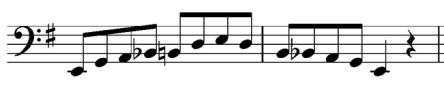
In order to truly learn this scale all over the neck of your instrument, let's take a look at the key of G major (which is relative to E minor).
If we were to plug the blue note "B flat" into all five of the G major pentatonic shapes, we would come up with five new sounding patterns of notes. Start with the G major pentatonic scale from root position all the way to the top of your neck.

Now let's plug in the blue note "B flat".

Follow this concept by adding the blue note into the correct location for all five shapes.



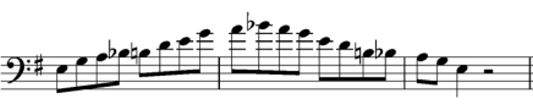
Remember to practice all five shapes in all twelve keys. You should be listening to various blues guitarist, vocalists, and musicians on various different instruments that have a firm grasp of the blues. Study their phrasing and the different ways they employ the blues scale. Try to feel their emotions and make an emotional connection to the phrases and the music. Good luck!

James Rosocha
Bassist James Rosocha is an educator, composer, and touring musician.
He can be heard on the last nine albums by jazz fusion guitarist B.D. Lenz or on his debut CD “Avalon.”
-
Four Beginner Guitar Tips That Make Everything Easier
Just Rijna
-
Will Weight Training Help My Guitar Playing?
Ioannis Anastassakis
-
Applying Negative Harmony To Modes
Tommaso Zillio
-
Avoiding Parallel 5ths In A Chord Progression
Tommaso Zillio
-
How To Be A 'Spider-Teacher’: Spinning With Your Students
Thijs de Klijn
-
Why You Should 'Gamify' Your Guitar Practice
Thijs de Klijn