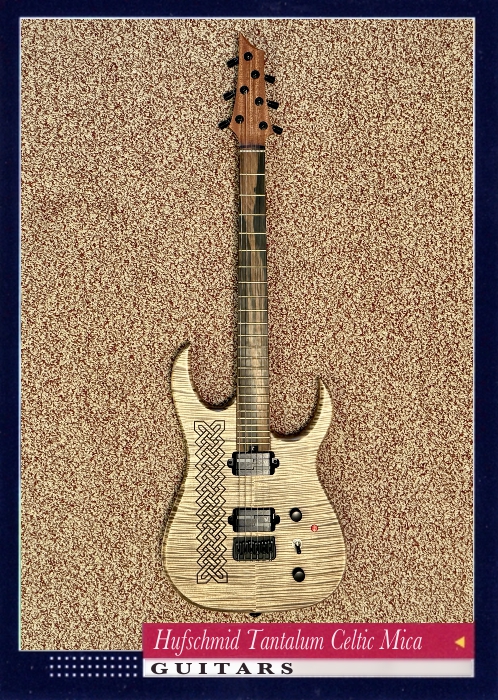
Hufschmid Tantalum Celtic Mica
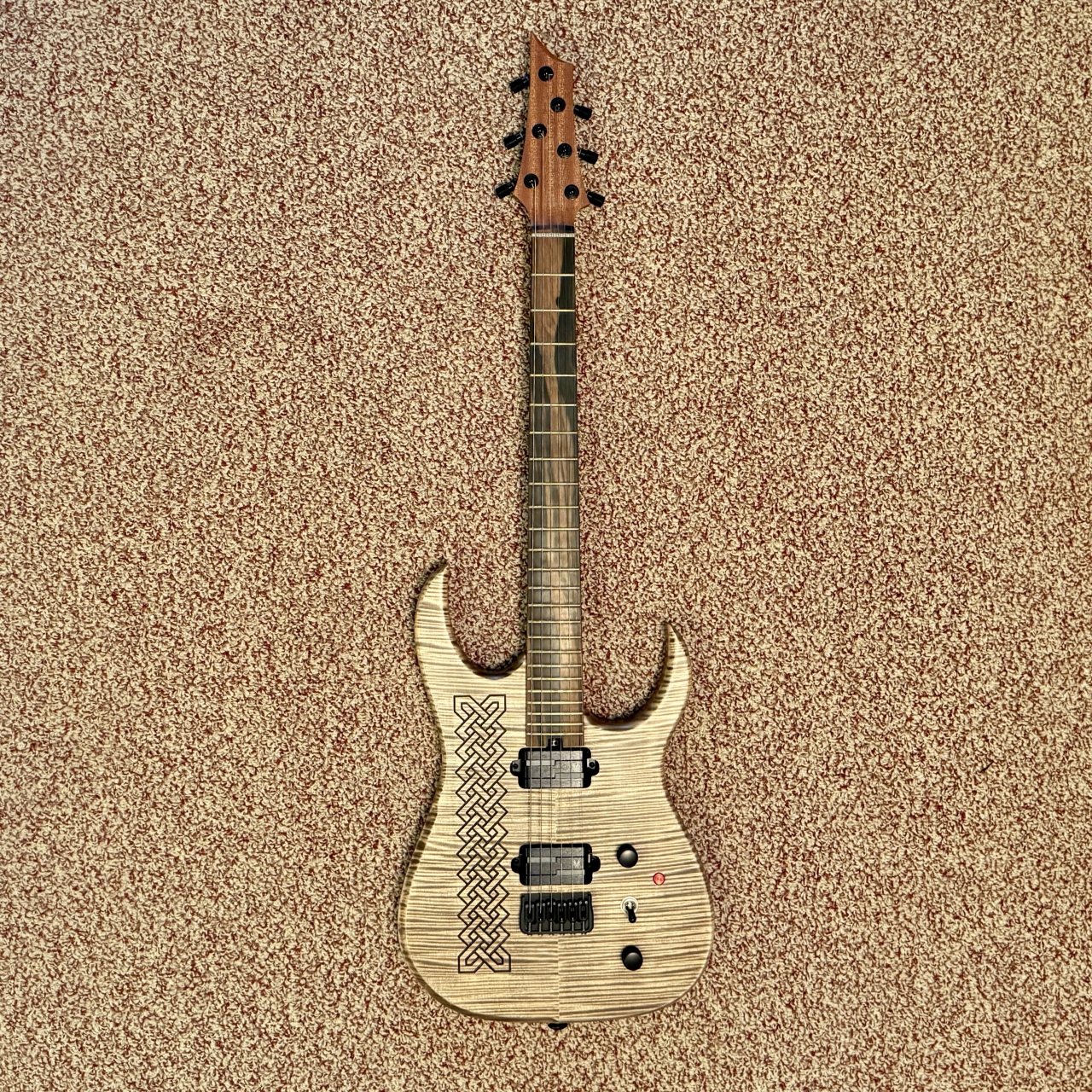

A Cold War Radar Component Ends Up in Your Tone Circuit. Most builders pick a capacitor from a catalog and move on. Patrick Hufschmid tracked down NOS Soviet KSG-2G silver-mica caps originally engineered for military radio and radar circuits, then mounted one behind plexiglass so you can actually watch the thing work. That's not eccentricity for its own sake - silver-mica caps offer tolerance precision that modern film capacitors rarely match, and the tone control range reflects it.
The Celtic Mica gets its name from that capacitor and from the knotwork motif crowning the top, a nod to Hufschmid's Scottish-Welsh roots. Personal touches like that separate builders who make instruments from builders who make statements.
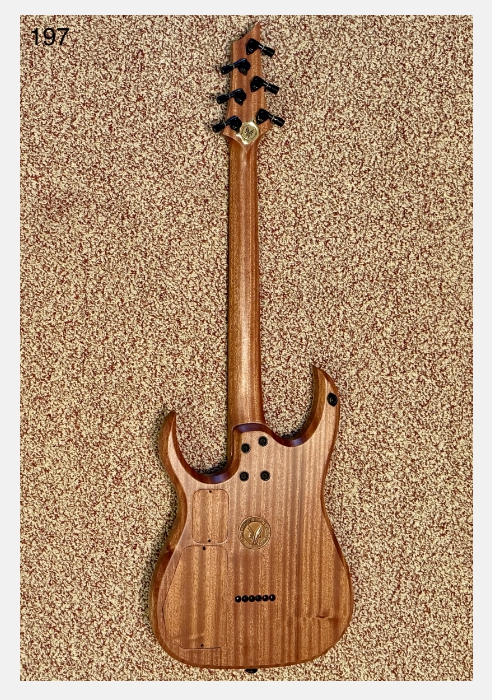
That single piece of quartersawn, highly figured Sapele mahogany forms both body and neck - no scarf joints, no glue lines, no compromise. Sapele runs slightly brighter than Honduran mahogany with tighter grain structure, and quartersawn stock resists seasonal movement that plagues flatsawn lumber. Topped with Swiss flame maple from Le Jura, because if you're sourcing exotic materials you might as well go the distance.
The brass C425 fretwire is where things get genuinely unusual. Brass frets deliver a warmer attack than nickel-silver and considerably different feel under your fingers, plus that golden color against Crelicam ebony looks like nothing else. The PEEK nut is Hufschmid's own material - a high-performance polymer with excellent transfer characteristics.
Those laser-etched Lace Alumitone Deathbuckers stay noiseless regardless of what you throw at them, using current-driven design rather than conventional voltage-driven coils. Copper shielding, copper-verdigris control cavity, and 25 hand-applied coats of oil varnish complete a build where nothing was decided by default.
Hipshot hardware and CTS pots handle the practical duties. Everything else here is deliberate.
Read Guitar Nine's Attic: G9 Guitarsenal.