The Guitar Player's Resource
An interesting approach to playing chords is to embellish your chordal work with single- and double-note riffs that complement the chord. These riffs can be played between chord changes to add style to even the most pedestrian of chord progressions. It's also wonderful when playing unaccompanied guitar, since you are effectively playing rhythm and leads together (or rhythm and melody).
Once of the masters at this style of playing was Jimi Hendrix, and his disciples since then have added their own stamp on the technique: Stevie Ray Vaughan, Chris Duarte, Colin James, etc.
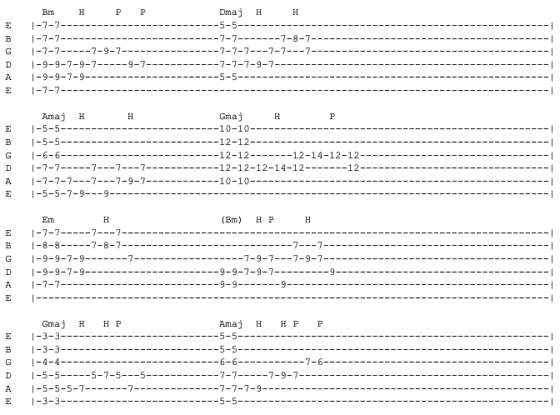
The first four examples show barre chords, which are strummed twice, followed by portions of scales which complement the chord just played. The riffs use a combination of hammer-ons, pull-offs, and slides to add color and interest to the part. Two of the chords are major and two are minor. As a variation, you can strum the initial chord only once, or even three to four times quickly. Generally speaking, the notes following the chords are in the same area of the fretboard as the barre chord. This helps to keep the overall sound smooth when playing a longer chord progression.

Example 1 - MP3

Example 2 - MP3

Example 3 - MP3

Example 4 - MP3
Example 5 demonstrates how you can put together an eight-bar chord progression using this technique. Again, two strums of each barre-chord per measure, followed by some licks to spice up the chord and add some melody to the music. The fifth measure, which would ordinarily be two beats of the B minor barre chord, is an example of how you can eliminate the chord entirely and substitute all single- and double-note licks for a single measure. This can be great for adding variety and a bit of unpredictability to the music. Some guitarists like to eliminate the barre chord every fourth measure; others like to exclude the chord at random, or whenever the mood strikes them.
Example 5 - MP3
For more ideas of how you can incorporate this rhythm 'n' lead method into your playing, get copies of Jimi Hendrix' Axis: Bold As Love and Electric Ladyland, or Stevie Ray Vaughan's Texas Flood.
Dan McAvinchey is a guitarist and composer living in Raleigh, NC.
He believes every musician or composer has the power to write, record and release their own music.