The Guitar Player's Resource
Hi all, and welcome to part two of our exploration of the wonderful world of arpeggios. This is a huge topic, so we will press on from where I last left you. As we saw in the first part of this series, arpeggios are the notes of a chord played individually. We learned some basic triad arpeggio shapes, and how to develop speed using sweep picking. Now it is time to expand on the triad arpeggio shapes.
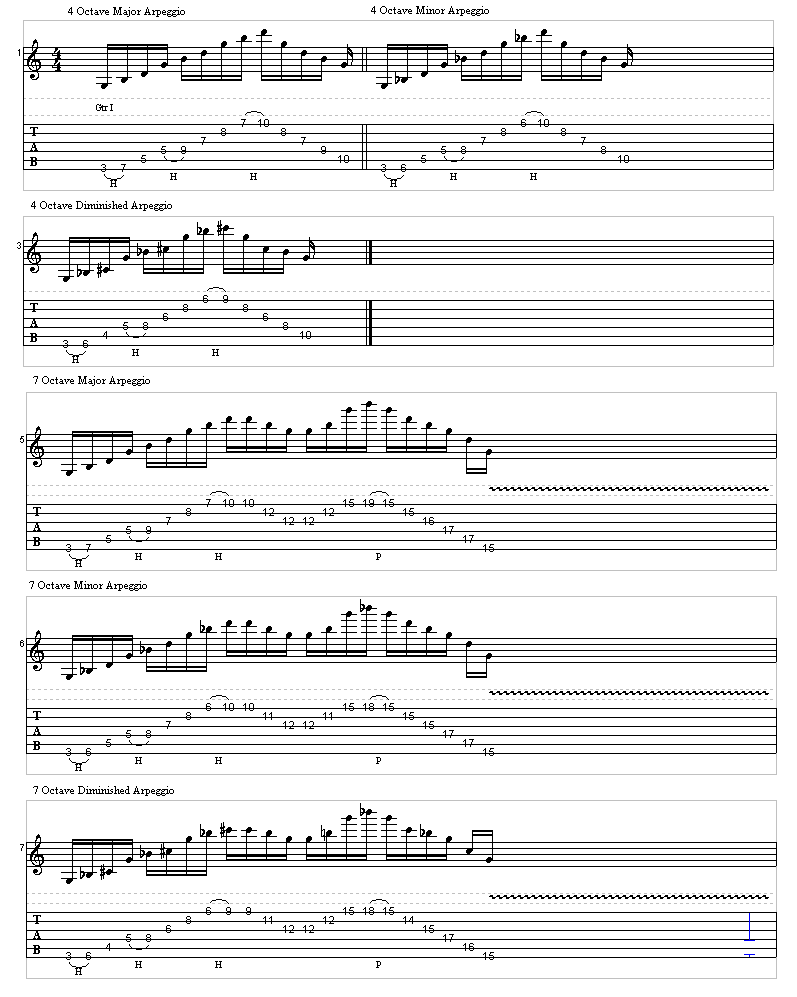
One of the coolest ways to make simple triad arpeggios sound sophisticated is to play them through multiple octaves. This will require breaking the notes of the arpeggios into smaller chunks that we will then connect across the neck. We will have to use Hammer Ons, and position shifts to make them happen. As always, fingerings are subjective, but I would advise that you walk up in a leapfrogging manner with your first finger moving up followed by your other fingers. These are also played with sweep picking, so you should start slowly with the metronome taking care to use a falling motion on the way up, and a dragging motion when descending. Because of the Hammer Ons and shifts it will be very tempting to let your sweep hand pause and then start again. Just take it slow and play it rhythmically even to the metronome and everything will be fine.
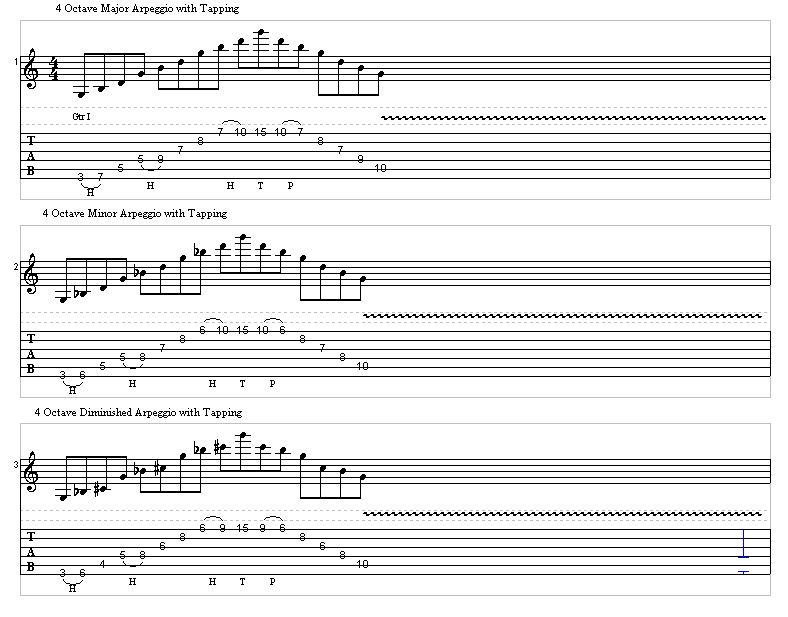
Another really great addition is some tapping. All that these require is that you hammer with your pinky and then tap with your right hand. It is really helpful if you keep your tapping hand in a position where it will be able to tap immediately after you have finished the sweep. This means that you will want to sweep and tap with your right hand over the fretboard. I have included a link to some footage from my upcoming instructional video so that you can get a better look at how this works.
These extended arpeggios give you the ability to cover huge sections of the neck without having to use several different arpeggios. They really add an incredible smoothness to your rippin' solos. Just so you can glimpse how these might work in context, I am including a link to the outro song from my instructional video so you can see them in action. Next time we will discuss seventh chord arpeggios, till then please enjoy.
Scott Allen is a 1996 graduate of the Musician's Institute, G.I.T. He currently teaches guitar to 65 to 70 students weekly at Northridge Music Center.
His latest CD is entitled "III", featuring his impressively fluid playing, with a style marked by an incendiary sense of phrasing.