
The Guitar Player's Resource
Sweep picking is a technique that was adapted to guitar from the violin and is a commonly-used technique to execute arpeggios.
Many people tend to think that this technique sounds very classical sounding, which is true if it is used with a classical sounding progression. Hopefully, this column will dispel that myth, but I suggest we take learning sweep picking in steps. We'll start with the typically generic-sounding classical examples first.
Let's start with the basic triads -- major and minor shapes. I usually tend to relate them with open chord shapes. What I mean by this is, for example, take 1a. This pattern is an A major arpeggio but if you look closely, the pattern looks similar to an A barre chord at the 12th fret. Or, you can look at it as an open A chord, only 12 frets higher.
Example 1b is an A minor arpeggio that looks similar to an open A minor chord. Example 2a looks like an E chord and 3a looks like a D chord while 2b looks like an E minor chord and 3b looks like a D Minor Chord.
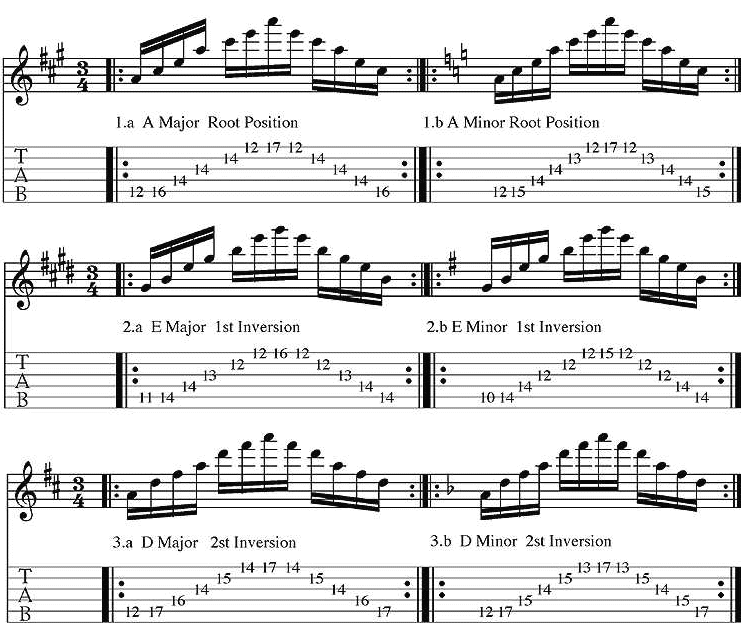
The key to executing these cleanly is basically to do them over and over. I highly recommend practicing these with a metronome at a slow speed. The secret to making the sweeps sound good is to make sure they are even and in tempo.
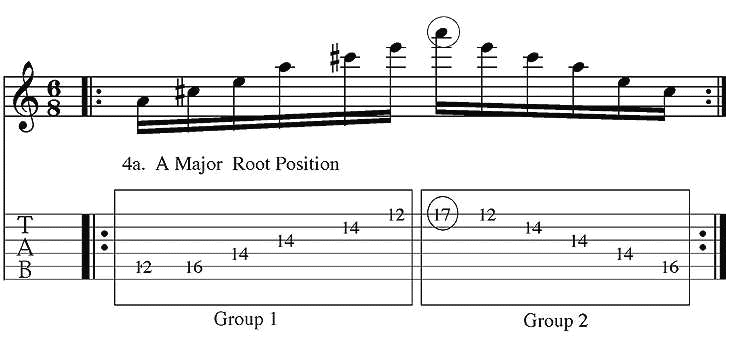
Let's take example 1a. Since this pattern contains twelve notes, we have to systematically break them up into two groups of sixes. Think of the ascending half as group one and the descending half as group two. Another thing to keep in mind is when
there are two notes on a string, pick just the first note and hammer on the second note. The only exception to this is when
you are actually using the second note as a pivot point like in the 7th note in the example below. Once you have mastered
this, the technique will gradually become much easier to do with any arpeggio.
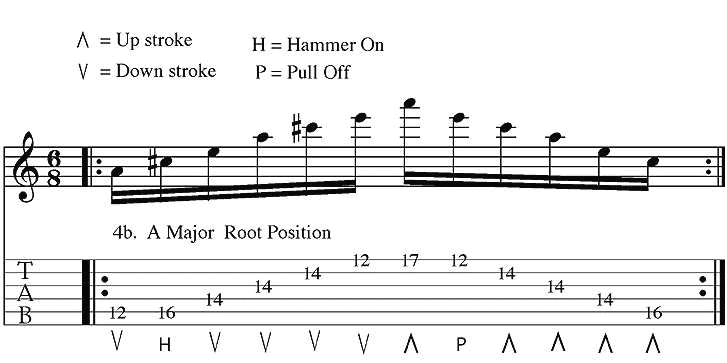
Exercise 4b shows the actual direction of the picking and which notes to hammer on and pull off. Just remember when you practice these to keep them as even as possible and in time.
So now you have the basic idea of how to sweep an arpeggio but the next question usually follows, "How do I use them when I am playing a song or when I am improvising?." One common way to use them is to follow a chord progression. Let's take example 5 with a generic I vi IV V progression in the key of C Major.
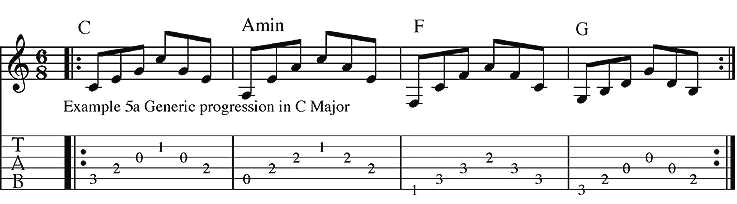
The next step is to decide which arpeggios to use to follow this progression. This one is up to you but for practical purposes, I recommend mixing different inversions around so you don't have to jump around the entire fretboard to follow a progression. Below I have given several possibilities to follow the progression so try to find one that you think feels most comfortable for you at first and then try experimenting.
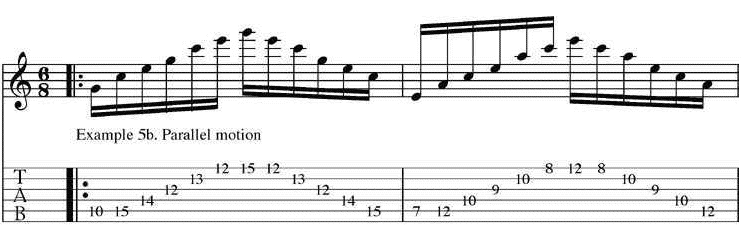
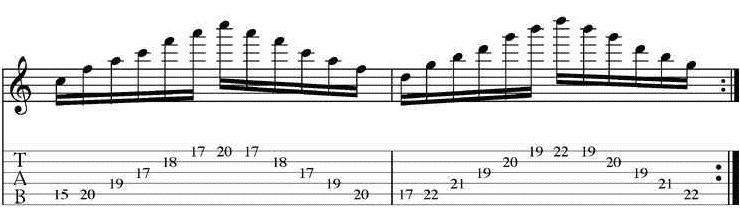
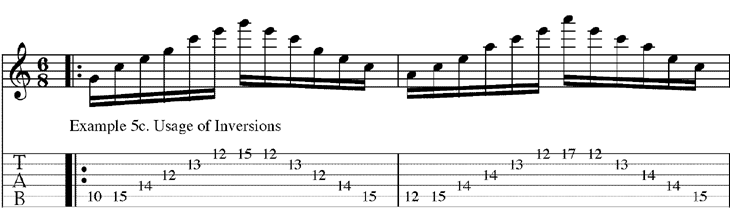
One other thing is that you don't always have to start from the bottom note. For a change, reversing the pattern can be a nice way to break the monotony.
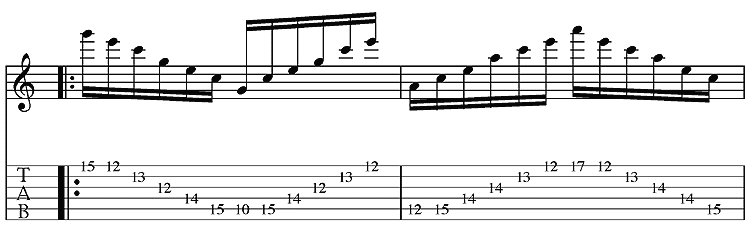
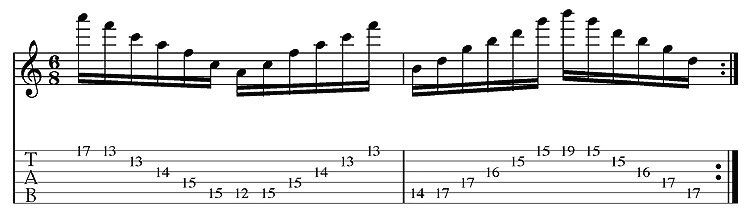
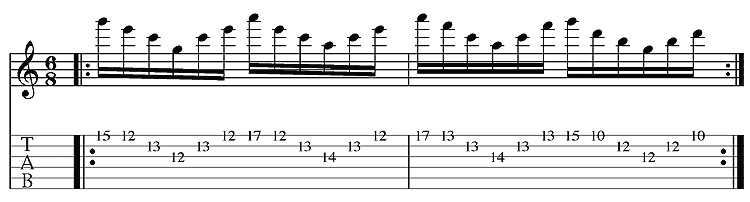
Another possibility is to use smaller-sized arpeggios or portions of the sweep arpeggios. Remember that they don't always have to be really large sweeps. Sometimes the smaller ones can be just as difficult or at times, even more difficult.
Neal Nagaoka, a guitarist and composer from California, has 28 years of studying and performing experience along with 25 years of teaching guitar students. His most recent CD "Transition" features ten hard rock and metal instrumentals.